Salt Lake City
Black Mold Removal in Salt Lake City
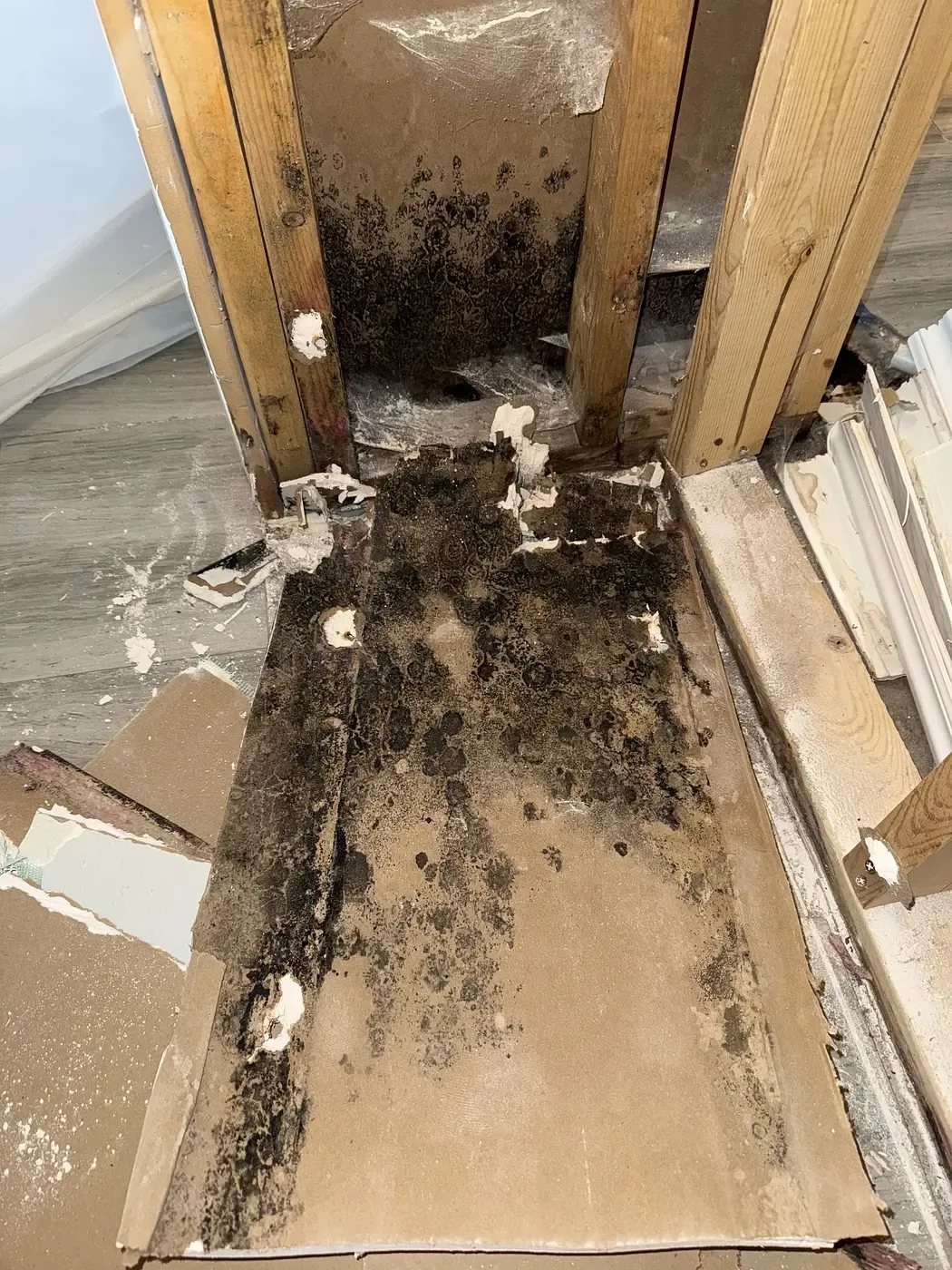
People in Salt Lake City call dark growth on a wall or in a basement “black mold.” That color is not a diagnosis. Many molds look black as they age. A laboratory identifies a sample. A photograph does not, and neither does the shade of the stain.
If the growth is already visible, removal does not have to wait on the species name. Daytona Restoration contains the area, removes material that cannot be cleaned, and HEPA-cleans what remains. Daytona Environmental tests when the growth is hidden or when someone needs the laboratory name. Jonathan Hernandez, president and industrial hygienist, leads that testing.
What the color does not tell you
Stachybotrys is one mold that is often dark, and it is the name people mean by black mold. Other common indoor molds can look the same. The CDC and EPA say indoor growth should be removed and the water stopped, whatever the color. The report from a sample describes the building. It does not diagnose a person. Health questions belong with a physician.
On the east bench, in the Avenues, and in older basements near Liberty Park and the west-side grid, a dark patch is usually a moisture story: a leak, foundation seepage, a window well, or a room that stayed wet. The neighborhood does not change the biology. It changes where we look for the water.
Removal, then a test only if it helps
Visible dark growth is a removal job. The work area is contained. A negative-air machine with HEPA filtration is used on a contained removal so dust stays in that area. Porous material that held the growth comes out. The rest is HEPA-vacuumed and washed. The water source is corrected.
A sample makes sense before that work when you cannot find the growth, or when a buyer wants the name. Clearance after the work can be Daytona Environmental, MICRO Certified Mold Inspector #87004. That clearance is not an independent third party, because Daytona Environmental is a division of Daytona Restoration. Ask if you need a separate firm. Credentials on the company include MICRO Certified Mold Inspector #87004. MICRO Mold Remediation Contractor #87064. IICRC Triple Master Restorer / Master Water Restorer No. 7764109 (IICRC Certified Firm No. 70210300). Utah asbestos ASB-7678 (firm ASBC-842). lead Pb-2861 (firm PBR & PBF 984). Utah licensed contractor #14024459-5501.
Related pages
-
Sick building syndrome
What the 1970s and 1980s research said, and what it did not say about mold.
-
Mold testing in Salt Lake City
The laboratory step, when the name or a hidden source matters.
-
Mold removal in Salt Lake City
The cleanup for visible growth, whatever the color.
-
Mold remediation
How containment and cleaning are scoped.
-
Salt Lake City remediation
The city page, including the east bench and the older grid.
Questions
Can you tell if it is black mold from a photo?
No. Color is not a species. A laboratory identifies a collected sample. If you can already see the growth, removal and stopping the water are often the useful next step without waiting for that name.
Will black mold removal make someone well?
We clean the building. We do not treat a person, and we do not promise a health result. If someone is sick, a physician is the right call. Damp buildings bother some people and not others.
How do I request black mold removal in Salt Lake City?
Call (385) 255-7384 or use the request form. We do not publish a price. The estimate is for that building, and you see it before paid work starts. The consult to decide whether testing is useful is free. Emergency service for water, fire, and sewage is available 24/7, including holidays. The office at 1010 North 500 East STE 200, North Salt Lake, is open Monday through Friday, 9:00 AM to 5:00 PM Mountain Time.
Request an estimate.
Call (385) 255-7384 or send the form. The office is 1010 North 500 East STE 200, North Salt Lake, UT 84054. We do not publish a price. You see the estimate before paid work starts.