Fire, water, and sewage
Water damage restoration
Water damage restoration is for clean or gray water that has wet the building: a supply-line break, a failed washer hose, a roof leak, a water-heater release. Daytona Restoration extracts the standing water, sets up drying, removes materials that will not dry, and documents the loss. Jonathan Hernandez is an IICRC Triple Master Restorer (Master Water Restorer, Master Fire and Smoke Restorer, and Master Textile Cleaner), IICRC No. 7764109 (IICRC Certified Firm No. 70210300).
Sewage, a toilet overflow that contains waste, and floodwater that has mixed with sewage are handled as contaminated water, not as something to dry and save. That work is sewage cleanup.
5.0 on Google, 3 reviews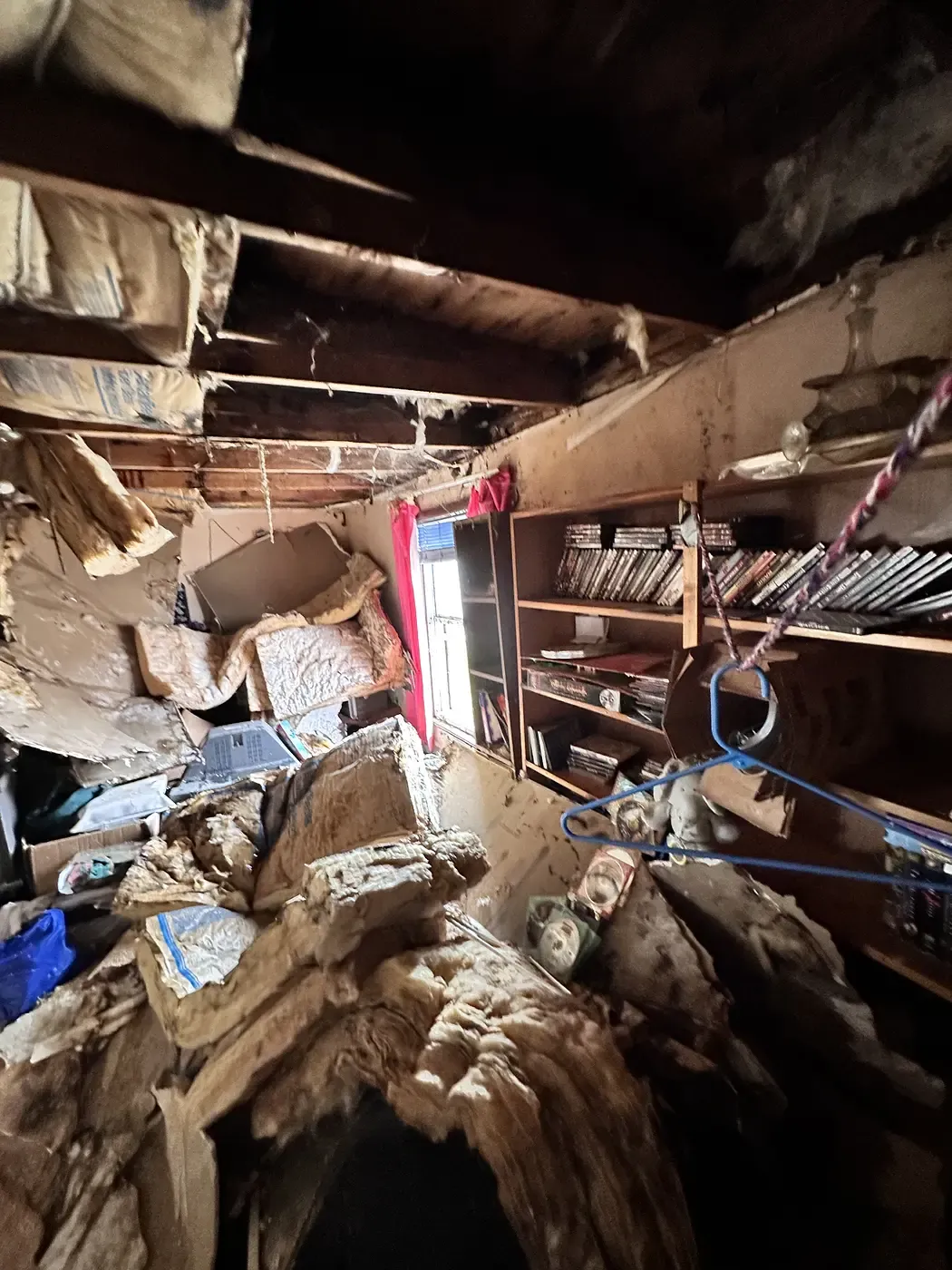
What happens on site
Standing water is extracted. Affected areas are opened where the water traveled inside walls or under floors, so the drying reaches the wet materials. Materials that are saturated and will not return to a sound condition are removed. Equipment stays until the structure is dry, and moisture readings are part of the record.
We do not publish a drying-time guarantee. A small laundry-room leak and a two-story roof leak are not the same number of days. The schedule in your quote is the one we will stand behind for that building.
Working with your insurance company
The job file records what was wet, what was removed, and how the drying was monitored. We work directly with your insurance company. Coverage is the policy’s decision. We do not promise that a claim will be paid.
If the water sat long enough for mold to grow, mold testing or mold remediation may follow. We will not fold that into the drying invoice without telling you.
Related
-
Sewage cleanup
Sewage is not a drying job. Contaminated materials come out, the area is cleaned, and the structure is dried after that.
Sewage cleanup -
Mold testing
Air and surface samples, a laboratory report, and a straight answer about whether testing is even the right spend.
Mold testing -
Mold remediation
Contain the area, remove the growth and the material that cannot be cleaned, HEPA-clean, and document it. The moisture source has to stop.
Mold remediation
Questions
Should I call you for a sewage backup?
Call, and say that it is sewage. The crew, the protection, and what gets thrown away are different from a supply-line leak. The sewage page describes that scope.
How fast can you get here?
The office is open 24/7, including holidays. Call (385) 255-7384 and we will tell you when a crew can be there.
Do you rebuild what you tear out?
The cleanup quote covers extraction, drying, removal of unsalvageable materials, and documentation. Reconstruction of what was removed can follow, and it is a separate quote.
We work with your insurance
We work with all insurance carriers in Utah. We work directly with your insurance company, including USAA and Chubb, State Farm, Allstate, Farmers, American Family, Liberty Mutual, Travelers, Nationwide, Progressive, Bear River Mutual, Safeco, Auto-Owners, The Hartford.
We document the loss and the work so you can share that record with your carrier. The policy decides what is covered. The names above are carriers that write homeowners insurance in Utah. Listing a name is not a partnership, an endorsement, or a preferred-vendor arrangement.
Reconstruction after the cleanup
Daytona Restoration, LLC is a Utah licensed general contractor, License #14024459-5501 (B100 General Building, E100 General Engineering), issued by the Utah Division of Professional Licensing. After the cleanup, remediation, or abatement, the same company can rebuild what that work removed, from the first call through reconstruction.
Ask before you schedule the paid work.
The consult is free. Samples, cleanup, and clearance are quoted first. We serve all of Utah from our home base in Davis County.